Pages

Friday, 29 May 2015

Eat your way to perfect skin!


Top tips to help you skin stay amazing all year round!

1. Eat your 5 fruits and veg a day!
I hope most of you do already, but the vitamins and minerals in your 5 a day do really help! Try include beta-carotene within the fruits and veg you pick, beta-carotene is great for anti-aging you will find it in sweet potatoes and pumpkin seeds.

2. Vitamin C
Vitamin C is a super antioxidant (antioxidants will help protect the skin against cellular damage caused by free radicals)  The foods below contain Vitamin C and will also help produce collagen.
 - Sweet potatoes, blackberries, strawberries, oranges, papaya and kiwi (and that is just a few!).

3. Vitamin E
Vitamin E helps against cell damage and helps supports healthy skin growth. Almonds, avocado, hazelnuts and corn oils all contain a good source of Vitamin E. 

4. Stop the crash diets! 
By gaining and losing weight often will cause your skin to stretch and relax more than necessary also by cutting down on foods you need you will lose essential vitamins and minerals, causing you to age quicker. 

5. Selenium
This antioxidant is very powerful, it works along side Vitamin E and C to help your immune system and protect against skin cancer, sun damage and age spots. Try eating Brazil nuts, fish, eggs and broccoli.  

6. Water!
Your skin needs to be hydrated in order to stay flexible, keep stocked up on water and herbal teas and avoid smoking and excessive drinking. 

7. Zinc!
Zinc will help repair skin damage, try eating fish, shellfish, meat, poultry, wholegrain and nuts. 

I hope this will help on your journey to fabulous skin!!


Richard Taylor Personal Training Club
www.richardtaylorpt.co.uk

"Changing your lifestyle to incorporate exercise and proper nutrition is not easy. But it is definitely a journey with endless rewards that are well worth achieving"

Saturday, 9 May 2015

Fruity Energy Bar


PREP:20 MINS
BAKE:25 MINS
SERVES:16

Ingredients
1 Bramley apple
2tsp Truvia granulated sweetener
2tsp Water
150g Butter (unsalted) plus extra for greasing
150g Dates (dried) stoned, ready to eat.
3tbsp Orange juice or apple juice
30g Mixed nuts roughly chopped
150g Dried mixed fruits(such as cherries, cranberries, blueberries)
150g Porridge oats
100g Oatmeal
1½tsp Sesame seeds

Method

Step 1 - Pre-heat the oven at 190 (170 fan oven gas mark 5) grease and line a shallow backing tin with grease proof paper.

Step 2 - Peel, core and slice the apple and toss with the sweetener. Place in a medium pan with 2 tbsp of water.

Step 3 - Cover the pan and place on the hob (medium heat). Simmer for 4 minutes, stir and cook for a further 1-2 minutes, (the apple should begin to go fluffy) leave to cool for 5 minutes. 

Step 4 - Blend the dates and juice until smooth the add the apple and blend for around 5 seconds. 

Step 5 - Melt the butter in a large pan over a low heat. Add the date pureĆ© and all the other ingredients apart from the sesame seeds.  

Step 6 - Stir well, press into a tin and sprinkle the sesame seeds on top, press them onto the mixture with the back of a spoon. Bake for 20 - 25 minutes until golden. 

Step 7 - Take out of the oven and leave for 10 minutes, cut into slices while in the tin, wait until completely cool and turn it out.

Step 8 - ENJOY!  

Richard Taylor Personal Training Club
www.richardtaylorpt.co.uk

"Changing your lifestyle to incorporate exercise and proper nutrition is not easy. But it is definitely a journey with endless rewards that are well worth achieving"

Saturday, 18 April 2015

Breakfast on the go?


Are you struggling for time in the morning? Feel it is hard to consume a healthy breakfast on the go? Are you either skipping breakfast or picking a sugary snack? 


Ta-dahh not anymore, here i have listed some healthy breakfast options which will help your busy mornings and your waist line.

1. BOILED EGGGS
Eggs are a fantastic source of protein and are already portioned out for you, boil 2 eggs the night before and keep the shells on, eat at home or carry in a container along side avocado and lemon if you desire and eat at work, the breakfast will keep you full throughout your morning and can be easily prepared.

2. Banana!!
As simple as it is, it will fill you up, give you a good dose of potassium and has it's own packaging. What more do you need?

3. EGGS....but scrambled.
Crack 2-3 eggs in to a container whisk them up with a bit of pepper and chuck them in the microwave, pop in a container and off you go... worry about the washing up later.

4. Yogurt
If you have a small Tupperware or portioned pots of Greek-style yogurt, sprinkle a small amount of quinoa seeds and granola on to the top and eat on the go.

5. A little bit fancy...
How about a chopped apple sprinkled with cinnamon with a dollop of almond butter?

6. SMOOOOTHIE
Pre-prepare a smoothie the night before, Blend 1 frozen banana, 2 tablespoons peanut butter, 1 cup almond milk, and a few ice cubes. Job done!

7.  Toast time
Toast a slice of brown bread, add peanut butter and a chopped banana, all preparation can be done while the bread is toasting!

If you would like to share your breakfast ideas, please feel free to comment :)


Richard Taylor Personal Training Club
www.richardtaylorpt.co.uk

"Changing your lifestyle to incorporate exercise and proper nutrition is not easy. But it is definitely a journey with endless rewards that are well worth achieving"

Friday, 3 April 2015

The truth about fats: the good, the bad, and the in-between


For years, fat was a four-letter word. We were urged to banish it from our diets whenever possible. We switched to low-fat foods. But the shift didn't make us healthier, probably because we cut back on healthy fats as well as harmful ones.
Your body needs some fat from food. It’s a major source of energy. It helps you absorb some vitamins and minerals. Fat is needed to build cell membranes, the vital exterior of each cell, and the sheaths surrounding nerves. It is essential for blood clotting, muscle movement, and inflammation. For long-term health, some fats are better than others. Good fats include monounsaturated and polyunsaturated fats. Bad ones include industrial-made trans fats. Saturated fats fall somewhere in the middle.
All fats have a similar chemical structure: a chain of carbon atoms bonded to hydrogen atoms. What makes one fat different from another is the length and shape of the carbon chain and the number of hydrogen atoms connected to the carbon atoms. Seemingly slight differences in structure translate into crucial differences in form and function.

Bad fats

The worst type of dietary fat is the kind known as trans fat. It is a byproduct of a process called hydrogenation that is used to turn healthy oils into solids and to prevent them from becoming rancid. When vegetable oil is heated in the presence of hydrogen and a heavy-metal catalyst such as palladium, hydrogen atoms are added to the carbon chain. This turns oils into solids. It also makes healthy vegetable oils more like not-so-healthy saturated fats. On food label ingredient lists, this manufactured substance is typically listed as “partially hydrogenated oil.”
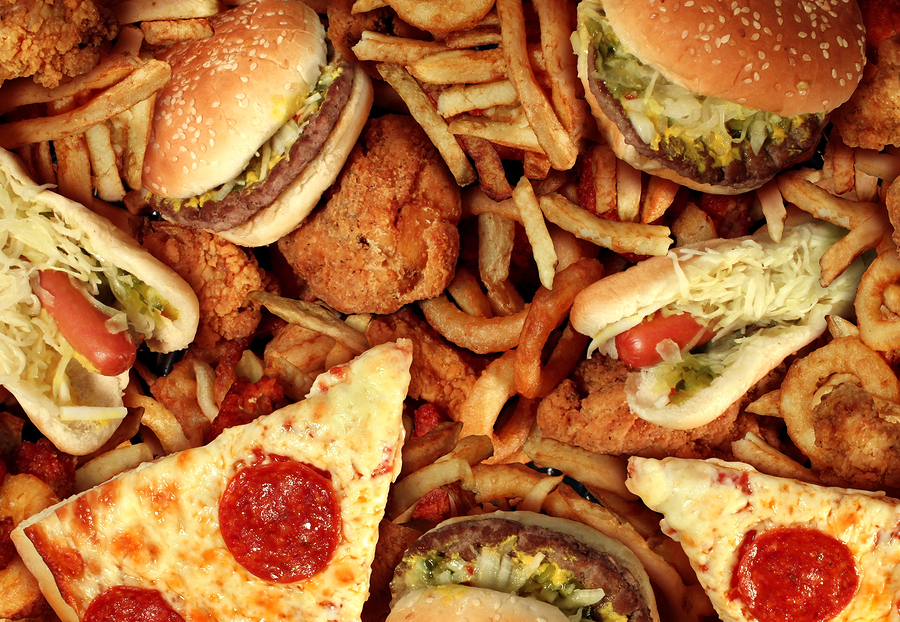
Early in the 20th century, trans fats were found mainly in solid margarine's and vegetable shortening. As food makers learned new ways to use partially hydrogenated vegetable oils, they began appearing in everything from commercial cookies and pastries to fast-food French fries.
Eating foods rich in trans fats increases the amount of harmful LDL cholesterol in the bloodstream and reduces the amount of beneficial HDL cholesterol. Trans fats create inflammation, which is linked to heart disease, stroke, diabetes, and other chronic conditions. They contribute to insulin resistance, which increases the risk of developing type 2 diabetes. Research from the Harvard School of Public Health and elsewhere indicates that trans fats can harm health in even small amounts: for every 2% of calories from trans fat consumed daily, the risk of heart disease rises by 23%.
An expert panel assembled by the Institute of Medicine expert panel concluded that trans fats have no known health benefits and that there is no safe level of consumption. Since 2006, the USFood and Drug Administration (FDA) has required food makers to list trans fat content as a separate line item on food labels. As a result, the food industry has reduced trans fats in many foods, and some local governments have banned trans fats in restaurant foods. Today, these mainly man-made fats are fading from the food supply.

In-between fats

Saturated fats are common in the American diet. They are solid at room temperature — think cooled bacon grease. Common sources of saturated fat include red meat, whole milk and other whole-milk dairy foods, cheese, coconut oil, and many commercially prepared baked goods and other foods.
The word “saturated” here refers to the number of hydrogen atoms surrounding each carbon atom. The chain of carbon atoms holds as many hydrogen atoms as possible — it’s saturated with hydrogen's.
A diet rich in saturated fats can drive up total cholesterol, and tip the balance toward more harmful LDL cholesterol, which prompts blockages to form in arteries in the heart and elsewhere in the body. For that reason, most nutrition experts recommend limiting saturated fat to under 10% of calories a day.
A handful of recent reports have muddied the link between saturated fat and heart disease. One meta-analysis of 21 studies said that there was not enough evidence to conclude that saturated fat increases the risk of heart disease, but that replacing saturated fat with polyunsaturated fat may indeed reduce risk of heart disease.
Two other major studies narrowed the prescription slightly, concluding that replacing saturated fat with polyunsaturated fats like vegetable oils or high-fiber carbohydrates is the best bet for reducing the risk of heart disease, but replacing saturated fat with highly processed carbohydrates could do the opposite.

Good fat

Good fats come mainly from vegetables, nuts, seeds, and fish. They differ from saturated fats by having fewer hydrogen atoms bonded to their carbon chains. Healthy fats are liquid at room temperature, not solid. There are two broad categories of beneficial fats: monounsaturated and polyunsaturated fats.
Monounsaturated fats. When you dip your bread in olive oil at an Italian restaurant, you’re getting mostly monounsaturated fat. Monounsaturated fats have a single carbon-to-carbon double bond. The result is that it has two fewer hydrogen atoms than a saturated fat and a bend at the double bond. This structure keeps monounsaturated fats liquid at room temperature.
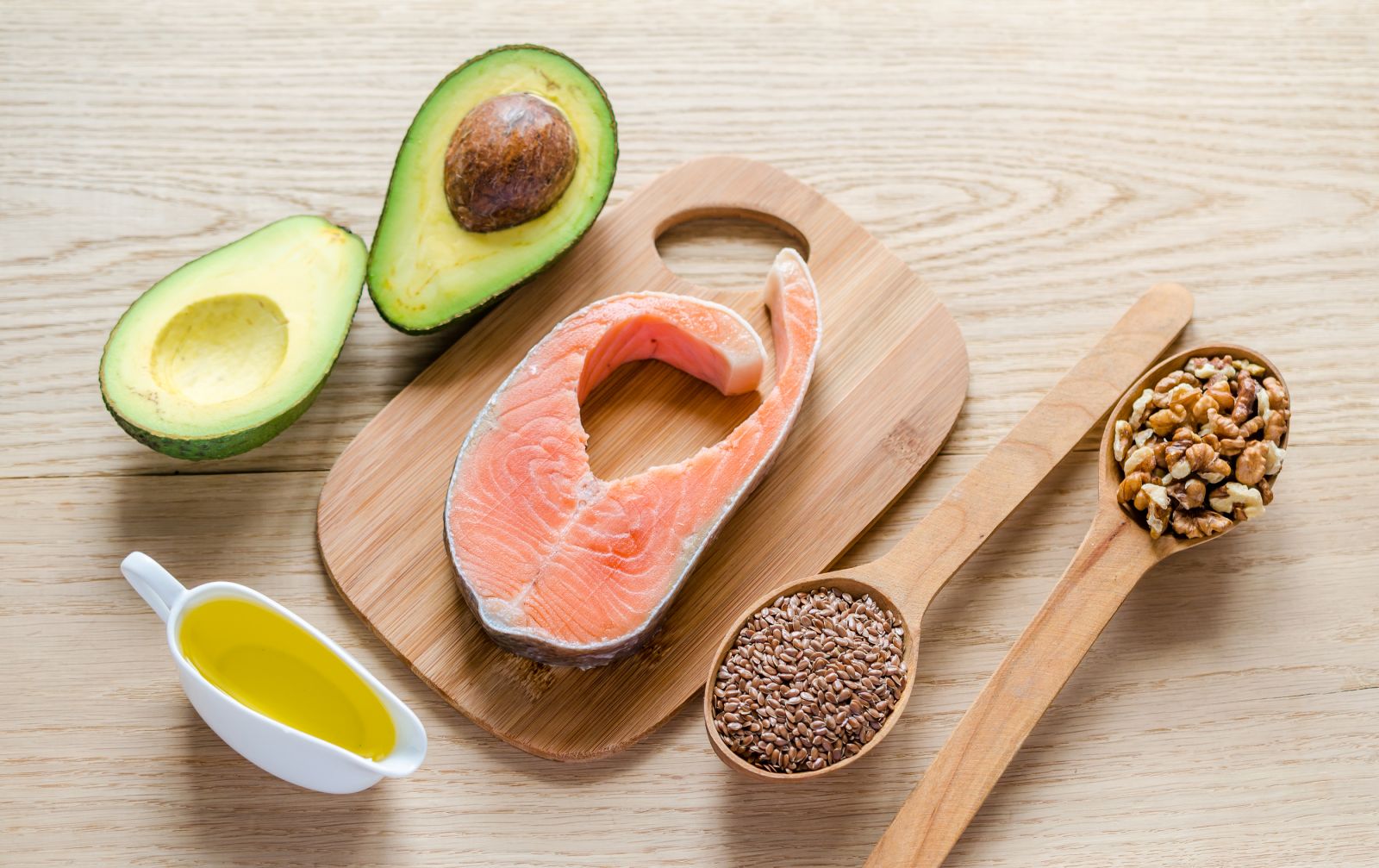
Good sources of monounsaturated fats are olive oil, peanut oil, canola oil, avocados, and most nuts, as well as high-oleic safflower and sunflower oils.
The discovery that monounsaturated fat could be healthful came from the Seven Countries Study during the 1960s. It revealed that people in Greece and other parts of the Mediterranean region enjoyed a low rate of heart disease despite a high-fat diet. The main fat in their diet, though, was not the saturated animal fat common in countries with higher rates of heart disease. It was olive oil, which contains mainly monounsaturated fat. This finding produced a surge of interest in olive oil and the “Mediterranean diet,” a style of eating regarded as a healthful choice today.
Although there’s no recommended daily intake of monounsaturated fats, the Institute of Medicine recommends using them as much as possible along with polyunsaturated fats to replace saturated and trans fats.
Polyunsaturated fats. When you pour liquid cooking oil into a pan, there’s a good chance you’re using polyunsaturated fat. Corn oil, sunflower oil, and safflower oil are common examples. Polyunsaturated fats are essential fats. That means they’re required for normal body functions but your body can’t make them. So you must get them from food. Polyunsaturated fats are used to build cell membranes and the covering of nerves. They are needed for blood clotting, muscle movement, and inflammation.
A polyunsaturated fat has two or more double bonds in its carbon chain. There are two main types of polyunsaturated fats: omega-3 fatty acids and omega-6 fatty acids. The numbers refer to the distance between the beginning of the carbon chain and the first double bond. Both types offer health benefits.
Eating polyunsaturated fats in place of saturated fats or highly refined carbohydrates reduces harmful LDL cholesterol and improves the cholesterol profile. It also lowers triglycerides.
Good sources of omega-3 fatty acids include fatty fish such as salmon, mackerel, and sardines, flax-seeds, walnuts, canola oil, and hydrogenated soybean oil.
Omega-3 fatty acids may help prevent and even treat heart disease and stroke. In addition to reducing blood pressure, raising HDL, and lowering triglycerides, polyunsaturated fats may help prevent lethal heart rhythms from arising. Evidence also suggests they may help reduce the need for corticosteroid medications in people with rheumatoid arthritis. Studies linking omega-3s to a wide range of other health improvements, including reducing risk of dementia, are inconclusive, and some of them have major flaws, according to a systematic review of the evidence by the Agency for Healthcare Research and Quality.
Omega-6 fatty acids have also been linked to protection against heart disease. Foods rich in linoleic acid and other omega-6 fatty acids include vegetable oils such as safflower, soybean, sunflower, walnut, and corn oils.

Healthy Eating!
Richard Taylor Personal Training Club
www.richardtaylorpt.co.uk

"Changing your lifestyle to incorporate exercise and proper nutrition is not easy. But it is definitely a journey with endless rewards that are well worth achieving"

Thursday, 26 February 2015

Is your tap making you fat?


Recently I saw an article which caught my eye regarding tap water, and some issues it has been having on people's health. I was really intrigued as it was specifically aimed at us in the west midlands.

Fluoride, a natural occurring mineral found in tap water may be causing lots of us thyroid problems. Our thyroid is a gland found in the neck which controls our mood, weight and other systems in our body. Studies are showing that in areas where the fluoride levels are higher, there are more rates of people suffering with an under active thyroid. If your thyroid gland is under active this can lead to depression, weight gain, fatigue and aching muscles.

Public Heath England have noted the evidence but say the water is safe to drink.

What are your thoughts?


Richard Taylor Personal Training Club
www.richardtaylorpt.co.uk

"Changing your lifestyle to incorporate exercise and proper nutrition is not easy. But it is definitely a journey with endless rewards that are well worth achieving"

Tuesday, 24 February 2015

Flat Tum Tips


Not feeling happy with you stomach? Have a read of my hints and tips to help flatten your stomach, and see if you feel slimmer and less bloated after trying a them out.

We can believe we are retaining water in are tummy's, but normally it is a cause of gas build up. Retained water will normally start by swelling in our feet and ankles, so be careful you do not get confused between the two. My hints and tips will be focusing on those of us who feel bloated.

1. Don't eat to fast
Eating to fast can lead us to swallow air, by taking in extra air we will fill our stomachs with it, leading us to bloat.
Each meal should take around 30 minutes to eat, the digestive process starts with the mechanical break down of food in our mouth, if you chew your food correctly you will help the following digestive process' to happen more productively.

2. Say no to fizzy drinks!
Fizz fizz fizz, just say no. Carbonated drinks cause increases in the amount of gas in your stomach, causing a bloat, try peppermint tea to reduce it back down.
Even diet drinks cause bloating, artificial sweeteners in food and drink can be a main source of bloating.

3.  Avoid constipation
Try to add fibre, fluids and exercise into your diet to avoid constipation. Veggies, fruit, whole-grains, water and 30 minutes of physical activity should do the trick!

4. Watch out for beans and gassy veg!
Beans, broccoli, cauliflower and sprouts can cause a gassy feeling if you are not a regular user of them, introduce these slowly into your diet if you have not eaten them for a while. The vegetables are full of nutritional value so do not eliminate them from your diet.

5. Little and often
I suggest 5 - 6 small meals a day, watch out for your calorie intake when changing your diet to suit this, by eating smaller meals it will help your digestive system, control your blood sugar and hunger.

Experts agree that you shouldn't fast, skip meals, or use laxatives or water pills to help you de-bloat or lose weight. A few studies suggest that peppermint tea, ginger, pineapple, parsley, and yogurts containing probiotics ("good" bacteria) may help reduce bloating.

Richard Taylor Personal Training Club
www.richardtaylorpt.co.uk

"Changing your lifestyle to incorporate exercise and proper nutrition is not easy. But it is definitely a journey with endless rewards that are well worth achieving"


Thursday, 12 February 2015

Is it really 30% exercise 70% diet?


You may of heard many sayings such as ' Abs are made in the kitchen' and '30% exercise 70% diet' but how true is it all?

If you were to run a marathon in 5 months and all you changed was your diet, would you complete it? No. Now let's try the 30/70 theory. If you changed your diet and started running 10 miles, 3 times a week would you complete it? Probably not. If we shared an equal balance between the two (diet and exercise) having a balanced diet and using a sufficient running program, would you complete it? Probably yes!

Still following?

So for certain sports the 30/70 theory may not work. If you are living a healthy lifestyle maintaining a reasonable fitness level and weight, I feel it will be a great theory. Healthy eating as much as possible along side a decent amount of exercise. Unfortunately there is no mathematical breakdown for a balanced lifestyle, it is all about finding what works for you as an individual.

Many of us believe that when we do fail in our diet we can 'make it up' in the gym, this would then be working on a 70% exercise 30% diet basis, if not worse. If we ate a high calorie/ high fat diets everyday we would most probably need to spend 4 hours on a treadmill per day to maintain your desirable weight. How realistic is that? So if you feel your failing on your current eating plan. Remember not to use exercise to compensate for your poor food choices. Stick to the right stuff and the results will shine through.

'Abs are made in the kitchen'
A healthy food choice is always a must when trying to improve your abdominal area, but do not expect by eating the right foods you will produce muscle. Lifting weights and working on core exercises will have to go along side healthy eating to be able to achieve your desired goals.

So to sum up, it is not about percentages, it is about working hard and fueling your body for the needs of your goals. Sit down and have a think if you are doing what you need to achieve your goals. If it is working that's great! If not, find what is best for you!

Richard Taylor Personal Training Club
www.richardtaylorpt.co.uk

"Changing your lifestyle to incorporate exercise and proper nutrition is not easy. But it is definitely a journey with endless rewards that are well worth achieving"